
SCROLL TO BEGIN

TAIWAN
WINDOG.

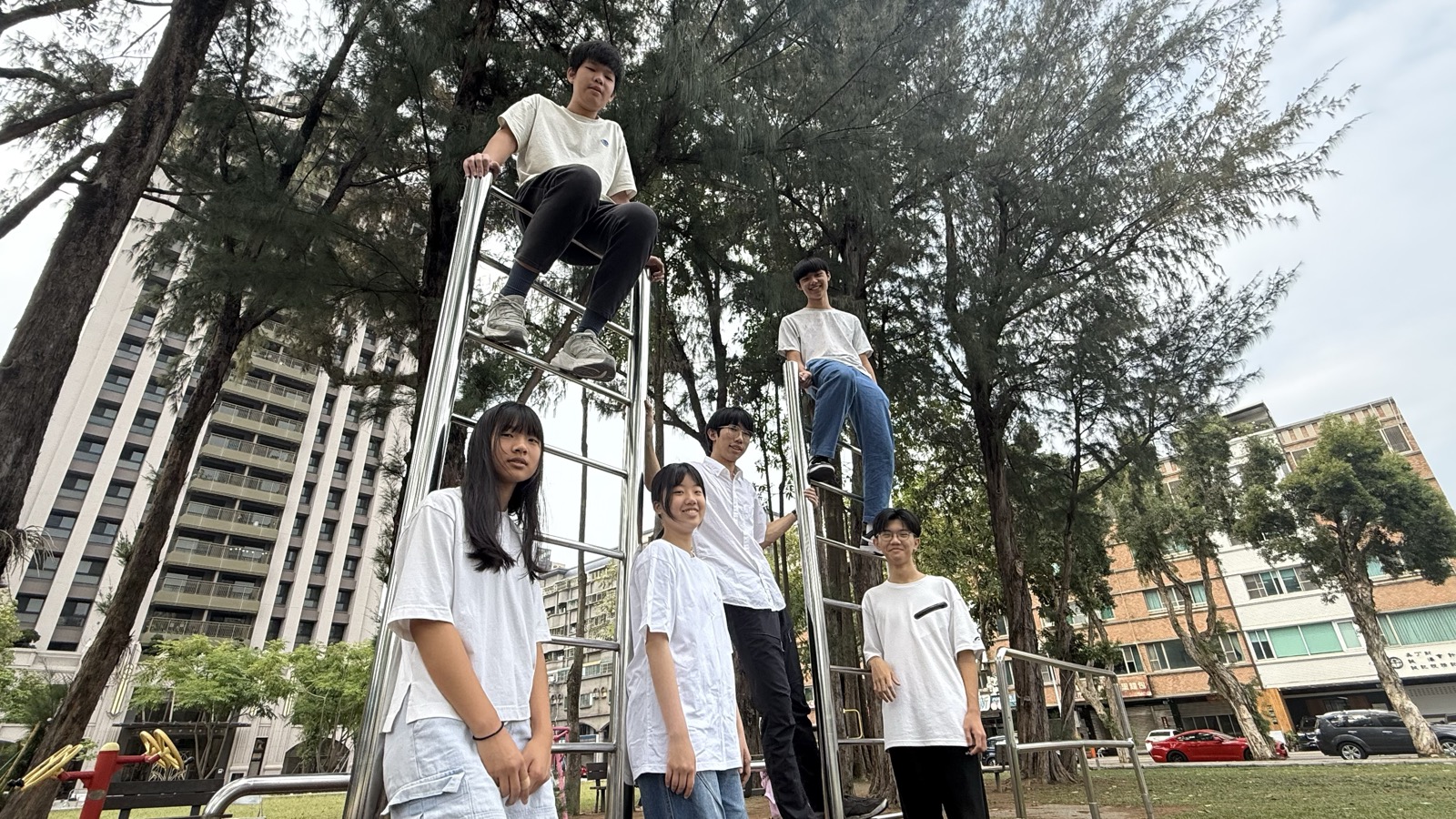
A 3D-printed micro wind turbine, built by six high-schoolers.
· The team
6
Engineers
2
Cities
80 mi
Apart
DESTINATION → UW-MADISON · KIDWIND WORLD FINALS 2026
· Our thesis

We didn't just print parts.
We printed mechanisms.

Six high-schoolers. Two cities. 80 miles apart. Every part on this turbine has been through at least two redesigns. The shape, the joint, the way it moves — engineered.

01 Base · final

Four legs. One shaft.
Open to the wind.

Skeleton frame in aluminum. Lets air pass through instead of catching it. Way less drag, way more stability.

Structure
Aluminum skeleton
Profile
Open frame
Shaft
Vertical · centered
連接軸 · CONNECTING SHAFT · V3
02 Tail vane · final

When wind shifts,
we follow.

Yaw moment = area × arm. We doubled both. Dual-vane geometry tracks wind direction in real time — no lag, no loss of power on every shift.

Vane Count
2dual
Area
vs V1
Yaw Moment
vs V1
尾翼固定架 · TAIL-VANE MOUNT · V3
03 Gearbox · modular

Stack. Pull. Replace.
Two minutes.

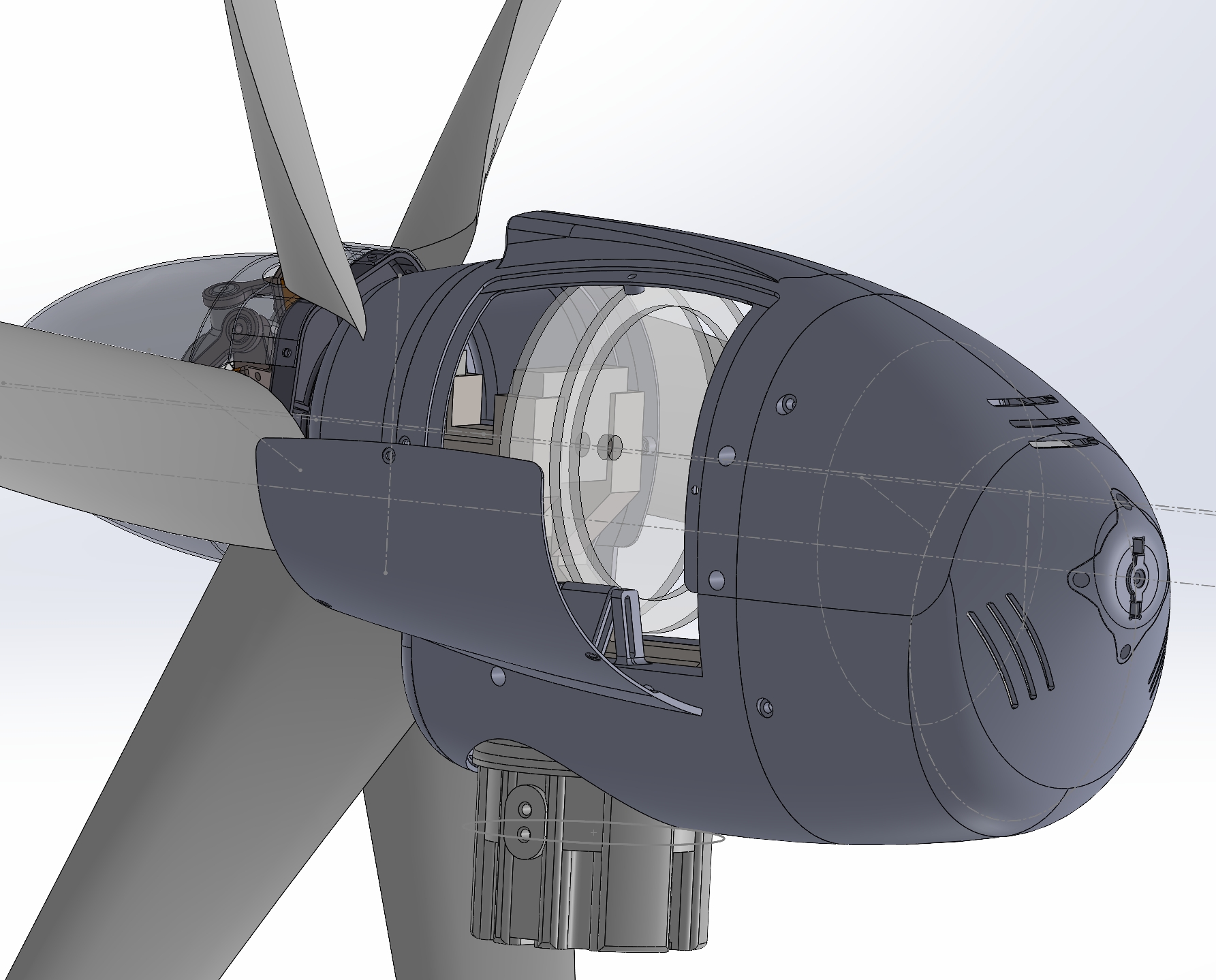
16 stages of independent modules stacked vertically. If one breaks, pull it out and plug in a new one. We tried planetary — too lossy. Helical — too sensitive to alignment. We ended up with spur gears: not the fanciest, the most forgiving.
Stages
16ratios
Gear Type
Spur
Swap Time
2min
機艙外殼 · NACELLE SHELL · V6
04 Blades · process

We don't print the blade.
We print the mold.

Foam fills the 3D-printed mold and wraps around a carbon-fiber spar. One solid, light, strong piece. Several times cheaper.

Steps
5
Time / Blade
~2hrs
Core
Carbon-fiber spar
桨穀中軸 10mm(下)· LOWER HUB · V3
05 Inside · cross-section

Strong where it needs to be.
Light at the tip.

A 6 mm square spar takes 80% of bending stress at the root. It tapers into a 3 mm round rod at the tip — weight reduction where load drops.

Root Spar
6mm sq.
Tip Spar
3mm rod
Load Path
Tapered transfer
連接軸 · CONNECTING SHAFT · V3
06 Pitch · collective

A helicopter changes direction mid-air.
Can a wind turbine do that?

Yes. A sliding disc on the rotor axis pushes pull-rods; the pull-rods convert axial travel into blade rotation. All 6 blades sweep 0°–90° in 20 seconds. No tools, no disassembly.

Mechanism
Pilot disc · pull-rod
Sweep · 0–90°
20sec
Tools Needed
None
連桿 · PULL ROD · V3
07 Shaft · survive 3 forces

It has to survive
three forces at once.

Centrifugal pull. Backward bending under thrust. Torsional twist from the gear train. The final shaft is sized for simultaneous worst-case — not the average.

Force 1
Centrifugal
Force 2
Bending
Force 3
Torsion
桨穀中軸 10mm(上)· UPPER HUB · V3
08 Self-balancing · passive

The turbine balances itself.

A 3D-printed ring housing, filled with glass beads, mounted on the rotor. Above critical speed the beads migrate to the opposite side of the heavy spot — the counter-force cancels the wobble. Same principle as washing-machine drums and tire balancing. No manual balancing. The turbine figures it out.

Mechanism
Bead ring
Medium
Glass beads
Inspiration
Washing machine
調整盤 10mm · PITCH DISC · V3
· Three iterations

From napkin
to final.

Three full redesigns of the pitch hub. Each version solved a problem the last one couldn't. Scroll to see what changed.

V1
桨穀 · The original
Snapped under load
V2
4-blade / 5-blade hybrid
Pitch range too narrow
V3
桨穀中軸 10mm · Final
Two-piece split + 10mm bore
桨穀 · V1
09 The final machine

What we built.

6
PU Foam Blades
NREL composite airfoil
47g
Per blade
field-repairable
8kg
Aluminum frame
open extrusion structure
16
Gear stages
spur · on-site swap
20sec
Pitch sweep · 0–90°
all 6 blades, no tools
2–10m/s
Wind tunnel range
3 custom tunnels at lab
EVERY PART. EVERY VERSION.

Built for
UW-MADISON.

KIDWIND WORLD FINALS · 2026